Professor Themis Prodromakis
“AI-on-Chip” and “AI-for-Chips”: Driving Sustainable Electronics through Bio-inspired Hardware and AI-Enabled Design
“AI-on-Chip” and “AI-for-Chips”: Driving Sustainable Electronics through Bio-inspired Hardware and AI-Enabled Design

Professor Themis Prodromakis, Regius Chair of Engineering
Centre for Electronics Frontiers, Institute for Micro Nano Systems,
University of Edinburgh, Edinburgh
Biography:
Themis holds the Regius Chair of Engineering at the University of Edinburgh where he established the Centre for Electronics Frontiers (CEF) and is currently the Head of the Institute for Integrated Micro and Nano Systems (IMNS). His work focuses on developing metal-oxide Resistive Random-Access Memory technologies and related applications and leads an interdisciplinary team comprising 60 researchers with expertise across materials process development to electron devices and circuits and systems for embedded applications. He holds an RAEng Chair in Emerging Technologies and is Adjunct Professor at UTS Australia and Honorary Fellow at Imperial College London. He is Fellow of the Royal Society of Chemistry, the British Computer Society, the IET and the Institute of Physics. He served as the Director of the Lloyds Register Foundation International Consortium for Nanotechnology and Co-Director of the UKRI Centre for Doctoral Training in Machine Intelligence for Nano- Electronic Devices and Systems (MINDS). In 2015, he established ArC Instruments Ltd that delivers high-performance testing infrastructure for automating characterisation of novel nanodevices in over 26 countries and in 2025 he founded EVA that is building new power-efficient AI hardware solutions. His contributions in memristive technologies and applications have brought this emerging technology one step closer to the electronics industry for which he was recognised as a 2021 Blavatnik Award UK Honoree in Physical Sciences and Engineering and with the Royal Academy of Engineering Princess Royal Silver Medal in 2025.
Abstract:
The escalating energy demands of modern AI necessitate a fundamental shift from traditional computing paradigms toward hardware that is both energy-efficient and intelligently designed. This plenary talk explores the synergy between AI-on-chip and AI-for-chips as a dual-track solution for a sustainable technological future. We first examine the integration of emerging semiconductor technologies with standard CMOS to create bio-inspired architectures, enabling high-performance in-memory computing at a fraction of the power cost of von Neumann systems. In parallel, we address the bottlenecks in semiconductor R&D by showcasing AI-driven capabilities to automate and accelerate the design, optimisation, and testing of modern electronics. Together, these advancements provide a holistic roadmap for delivering next-generation electronics that are not only inspired by biological efficiency but are also developed through the very intelligence they aim to host.
Dr. Abu Sebastian
“Neural Principles as a Progressive Path to Efficient Deep Learning Inference Hardware
“Neural Principles as a Progressive Path to Efficient Deep Learning Inference Hardware

Dr. Abu Sebastian
IBM Research Europe, Zurich Research laboratory
University of Heidelberg
Biography:
Abu Sebastian is a Distinguished Scientist at IBM Research – Zurich, where he leads the AI Compute Frontiers group. He is also affiliated to the Kirchhoff-Institut für Physik at Universität Heidelberg. For his contributions to micro- and nanoscale mechatronic systems, he was honored with the IEEE Control Systems Technology Award in 2009 and the IFAC Mechatronic Systems Young Researcher Award in 2013. His research in exploratory memory technologies and emerging computing paradigms has also earned him three European Research Council (ERC) grants: the Consolidator Grant (2015), the Proof-of-Concept Grant (2020), and the Advanced Grant (2025). At IBM, he has been honoured as a Master Inventor, and in 2019 he received the Ovshinsky Lectureship Award for his contributions to phase-change materials for cognitive computing. He is a Fellow of the IEEE.
Abstract:
Deep neural networks, commonly referred to as deep learning, have driven major advances in artificial intelligence over the past decade and are conceptually rooted in principles from computational neuroscience. In contrast, their hardware realizations have largely departed from neuro-inspired design paradigms, giving rise to a pronounced “hardware divide” that manifests as substantial energy inefficiency. Addressing this gap has become a central objective of contemporary classical computing research.
Recent years have seen the gradual incorporation of brain-inspired concepts into AI computing systems. For instance, modern application-specific digital accelerators for deep learning leverage massive parallelism and reduced-precision arithmetic, while in-memory computing (IMC) architectures adopt the principle of co-locating computation and memory to enable in-place processing. In this talk, I will review the current state of the art in IMC-based accelerators and outline my perspective on the additional neuro-inspired principles that must be integrated to further narrow the hardware divide.
Prof. Kostas Doris
Fellow NXP Semiconductors, Technical University Eindhoven
Fellow NXP Semiconductors, Technical University Eindhoven
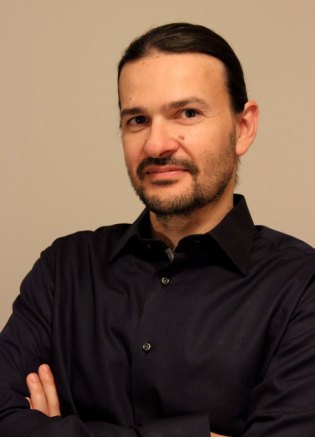
Prof. Kostas Doris
IFellow NXP Semiconductors
Technical University Eindhoven
Biography:
Kostas Doris is a Fellow at NXP Semiconductors and part-time Professor at the Technical University of Eindhoven. He pioneered the automotive industry’s first mm-wave RFCMOS radar and currently leads NXP’s innovations in mm-wave transceivers, silicon processes, and packaging. Kostas has authored numerous publications and patents, and actively collaborates with European universities. He has held leadership roles in ISSCC, RFIC, and EUMW/EURAD.
Abstract:
The rapid evolution of automotive radar sensors operating in the 76-81 GHz band is transforming vehicle perception enabling increasingly advanced autonomous driving functions. Beyond automotive applications, these technologies are emerging as key enablers for autonomous robots, drones, and intelligent machines that require robust environmental awareness under challenging conditions.
Future sensing systems must support high-resolution mapping, localization, and object classification while operating reliably across diverse environments. Meeting these demands requires mm-wave radar sensors capable of generating dense point clouds with high spatial resolution, a wide field of view, and extended range, while remaining compact and energy efficient.
This talk will explore advances in waveform design, antenna technologies, and circuit architectures that continue to push the limits of large-scale MIMO radar in the 76-81 GHz band. It will also discuss opportunities beyond 100 GHz and examine how these developments can complement optical sensing modalities. The convergence of automotive and robotic sensing will be presented as a key driver of the next generation of intelligent perception systems.