Dr. Gaia Tomasello
Navigating the GAI Revolution in Scholarly Publishing
Navigating the GAI Revolution in Scholarly Publishing
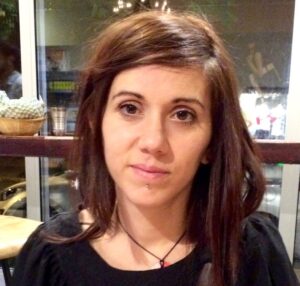
Dr. Gaia Tomasello
EiC of Advanced Electronic Materials
Wiley VCH, Berlin office, Germany
Biography:
Gaia Tomasello is Editor in Chief of Advanced Electronic Materials and Advanced Physics Research (Wiley), and Deputy Editor of physica status solidi (a). She leads editorial strategy and community engagement across materials science and physics, and has contributed to the launch and development of several journals within the Advanced portfolio. Gaia holds a Ph.D. in Theoretical Chemistry from the University of Bologna and conducted research at Freie Universität Berlin as an Alexander von Humboldt Fellow and at Polytechnique Montréal, working on topics ranging from ultrafast excited-state dynamics to organic electronics. Since joining Wiley in 2019, she has been actively involved in advancing scholarly communication and exploring the impact of emerging technologies, including Generative AI, on scientific publishing.
Abstract:
Generative Artificial Intelligence (GAI) tools and AI-assisted technologies are becoming an increasingly integral part of our modern research landscape and consequently are already impacting the publishing industry as well. The current wave of GAI tools uses vast datasets in order to generate new content instead of using published data to write structured articles. The result is a paradigm shift in publishing and digital economy that will impact the publishers around the globe requiring them to adjust accordingly. It is therefore of paramount importance being aware of the limitations, risks, and potential implications when using them, gaining a deeper understanding of the kinds of data and models on which GAI tools are trained, the accuracy of the results, and the implications for intellectual property and law. In this seminar that will be presented on occasion of the 33rd IEEE International Conference on Electronics, Circuits and Systems ( ICECS ) as a Wiley peer review editor, after a short introduction to our portfolio and the opportunities to publish with our prestigious journals, I will deliver an overview on which kinds of GAI tools can be used when preparing a scientific manuscript, always keeping in mind the scope of enhancing the impact of a scientific text rather than replacing the critical thinking, analysis, and creative thought that it needs absolutely to be preserved. It is an exciting time for the development of GAI tools in research and scientific publishing – and with caution and consideration, we can get the most out of the potential opportunities that they offer.